OUR SUSTAINABLE SOLUTIONS
REGENERATE
SOIL
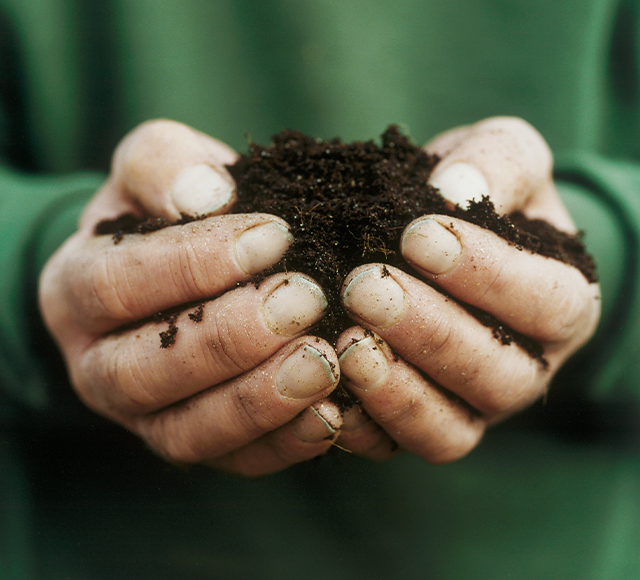
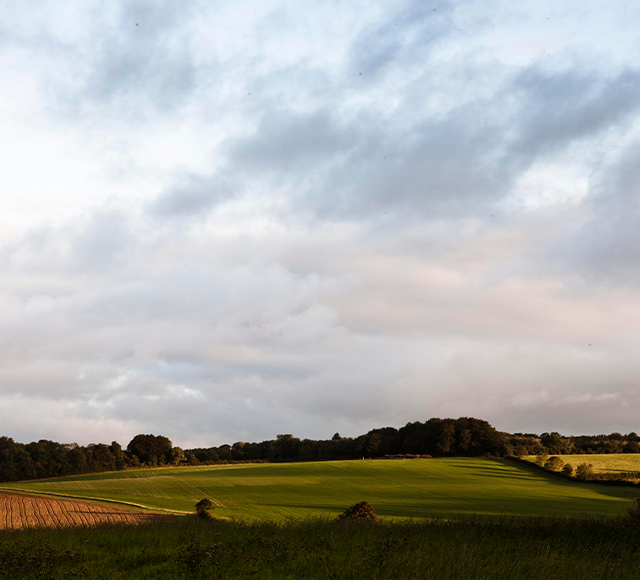
Humans are not only dependent on soil to provide the nutrients in our food; it is essential in sustaining the earth’s ecosystems and all life within them. As a farm, our soil is one of our most vital assets but it is also one of the most valuable tools the world has to help it solve the climate crisis. Soil is the earth’s biggest carbon sink. It draws damaging carbon out of the atmosphere and stores it in the ground, helping to reverse some of the harm already caused by greenhouse gases and prevent global temperatures rising further.
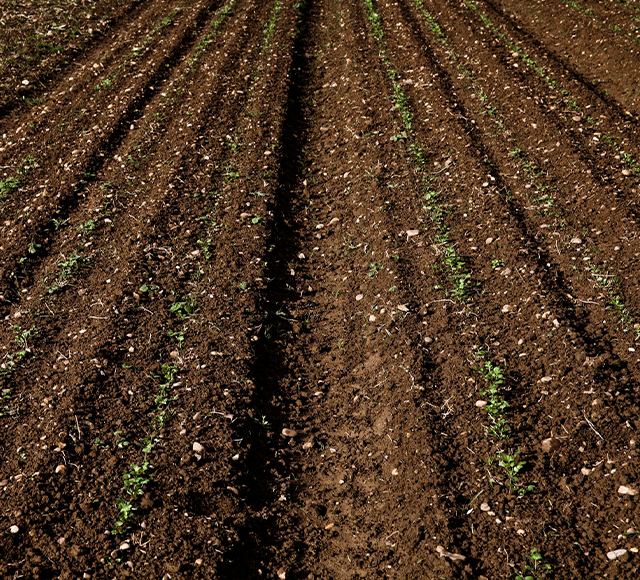
Unlike intensive farming methods that rely on chemical fertilisers and strip the soil of its nutrients, organic farming methods strengthen the structure and integrity of the soil and keep it fertile. Our livestock plays a very important role in helping to maintain the health of our soils. Nutrient recycling with the manure from our animals is one of the greatest advantages of mixed farming, so we spread their valuable muck back on to the fields to fertilise our crops. This rich manure is a natural and organic way to feed the soil and produce flavoursome, nourishing vegetables, cereals and forage.
Where possible we minimise ploughing and ensure that we protect our topsoils by keeping them covered for as much of our crop rotation as we can. This preserves the soil and locks in its nutrients for future growing cycles. As part of our rotation, we sow cover crops such as clover and vetch, which help to draw the carbon and nitrogen – a natural fertiliser – out of the air and into the soil.
BIODIVERSITY
Biodiversity is the variety of living organisms that exists in the world. It is vital for sustaining life on earth yet biodiversity loss of is one of the biggest threats facing humanity and it is human activity, in particular intensive industrialised agriculture that is causing its decline. We need to maintain a balance of organisms in spaces and habitats – and protect them – so that animals and plants can coexist and help each other flourish. Thriving biodiversity not only benefits food production, it is integral to soil health and the resilience of the world’s ecosystems.
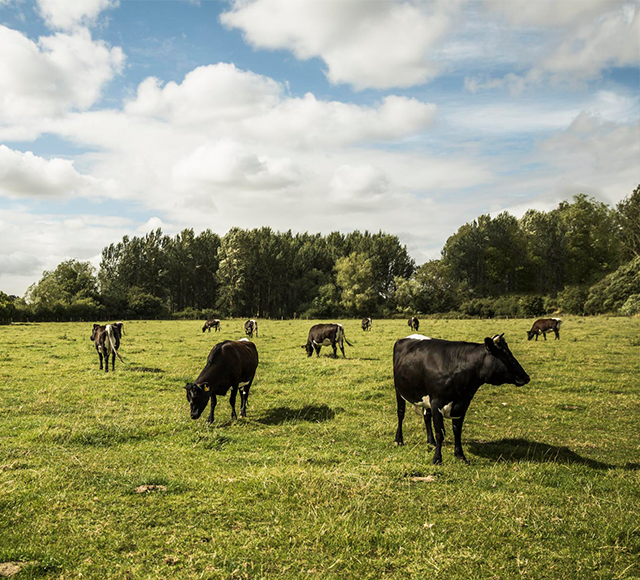
The way land and landscapes are managed plays a huge role in our ability to support or deplete biodiversity. Britain’s wetlands used to be an important part of our farmed environment, with many being used for rough grassland grazing. However, with the intensification of farming, large numbers have been drained and given over to pasture with the result that many of the species that rely on them, including snipe, wildfowl, reptiles and amphibians, have lost their habitat. This is why we have reinstated 17 acres of wetland at our farm. Every year our Gloucester cattle graze the wetland, which not only increases the land’s productivity and effectiveness but also its biodiversity. Creating areas of short grass and taller tussocks results in a patchwork of healthy habitats that benefits plants, invertebrates and birds, particularly overwintering wildflowl and even the rare peregrine falcon, as well as freshwater life.
Our wetlands also act as a vital buffer against extreme weather conditions: they absorb water in times of flood and release it in times of drought, allowing us to manage and survive increasingly threatening weather events and mitigate any damage caused. We measure nitrate and phosphate levels in the water and carry out invertebrate and insect counts to monitor the health of the wetland and its source, the river Evenlode, to understand the positive impact organic farming has on water quality across the farm.
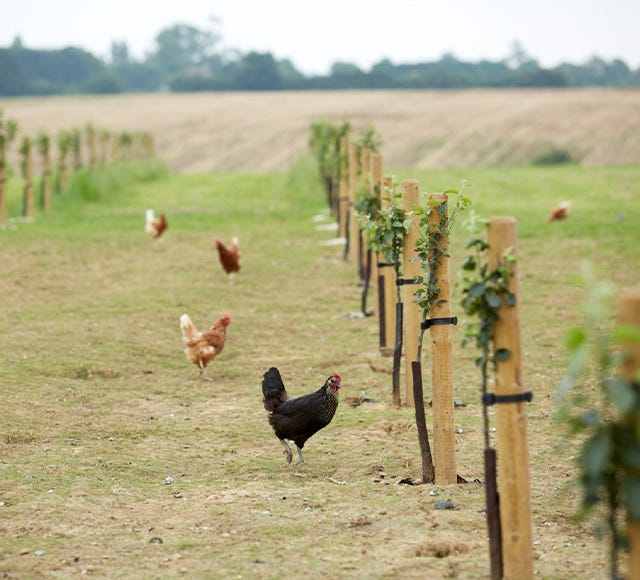
Our 30-acre agroforestry project is an innovative, regenerative way of working land, offering the farm an array of benefits. By integrating trees, crops and hens on the same piece of land, not only do we increase the productivity of our crops, we encourage biodiversity by creating habitats, and improve the welfare of our hens by providing them with the shade they naturally seek, and space to roam among the 4,000 trees. Our mobile hen houses leave behind a rich, fertile soil, perfect for nourishing the crops that follow them.
Organic practices also support and encourage biodiversity by respecting and feeding natural ecosystems and avoiding harming them with chemicals or pesticides. Our market garden is home to a diverse range of fruit, vegetables and cut flowers – over 500 varieties in total – and we have also planted 180 acres of wildflower meadow full of native plants that attract bees, butterflies and other pollinators. Our beehives at the farm also support and encourage pollination.
ANIMALS
Upholding the highest standards of animal welfare is an integral part of farming organically but also an affirmation of the respect we need to show all life. All of our animals are certified organic by the Soil Association, which carries out rigorous assessment and sets the highest standards of animal welfare in Europe.
Our respect for welfare begins with the breeds we choose to rear: native livestock breeds that are naturally adapted to our environment and land and thrive in an organic farming system. They are 100% grass-fed, roaming our rich pasture in the warmer months and eating silage and forage in the winter.
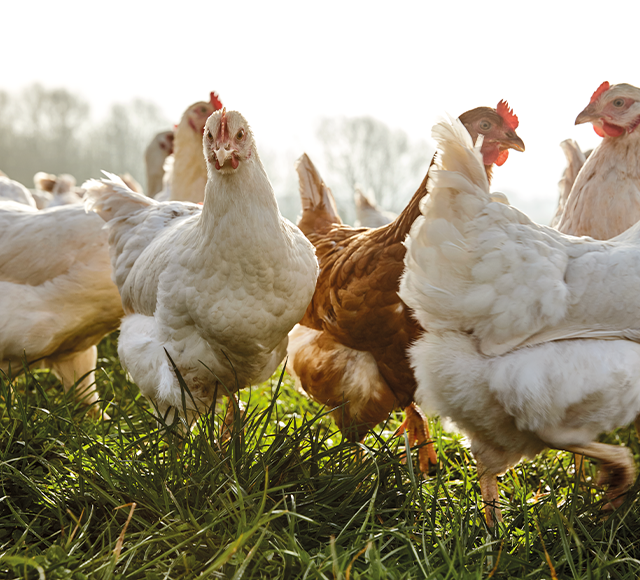
For poultry in particular, organic is the only standard that guarantees high welfare, yet only 2% of poultry farmed in the UK is organic. Even ‘free-range’ does not provide the guarantee that animals are being treated with care and respect. Our Soil Association certification ensures that our birds have plenty of space to roam, constant access to rich organic pasture through large pop holes that run the length of their houses, and are limited to a flock size of 600 (unlike free range and conventional which set much higher limits). Our birds do not receive routine antibiotics and 100% of their feed is organic and free from any GM ingredients. But what is unique to us at Daylesford is that we own and are accountable for the whole of our poultry cycle – from the eggs in our hatchery through to our abattoir. And we are the only farm in the UK to be doing this in an organic system.